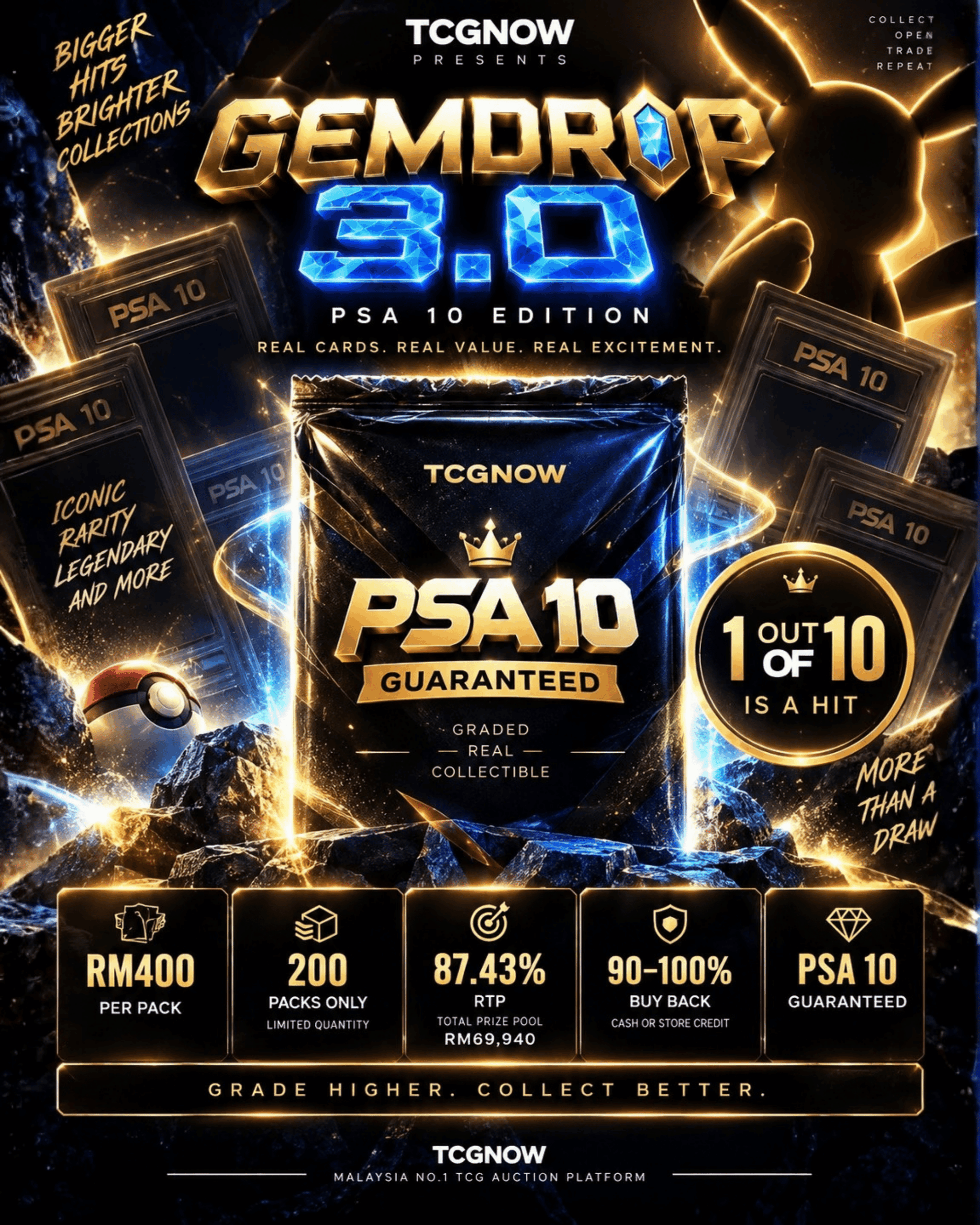
The 2026 Guide to Spotting Fake PSA Pokémon Slabs
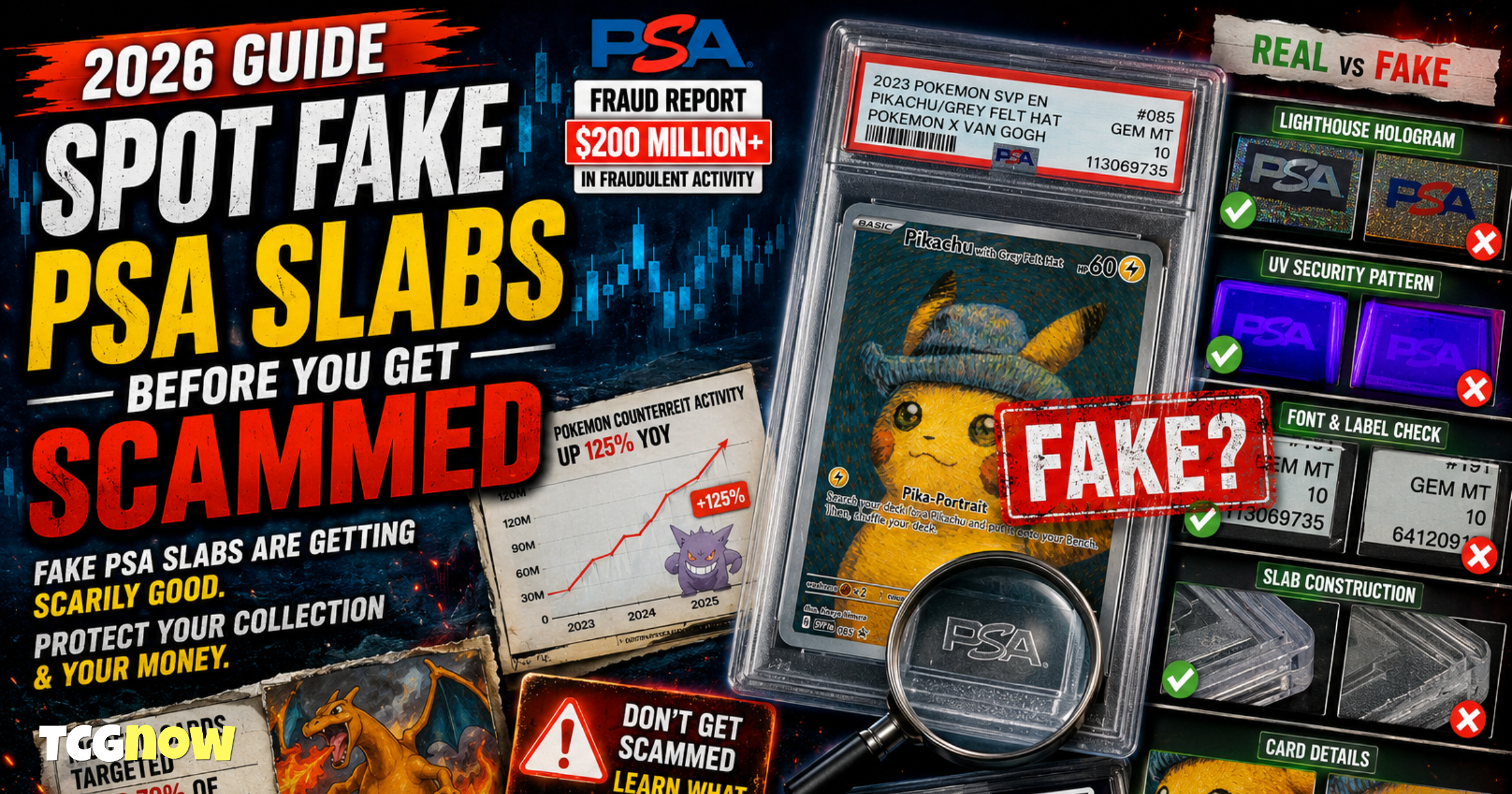
The fake slab problem in Pokémon is getting out of control.
A few years ago, fake PSA slabs were honestly easy to spot. The fonts looked wrong, the plastic felt cheap, the labels were blurry, and the holograms looked terrible. Most experienced collectors could identify them within seconds.
Not anymore.
Modern fake PSA slabs are becoming dangerously convincing, especially for newer collectors buying through Facebook groups, livestreams, marketplaces, and local deals. Some counterfeit slabs now even copy PSA UV security marks and hologram effects surprisingly well.
Special credit to Malaysian collector Ng Kah Wai for helping spread awareness about fake PSA slabs locally, alongside references shared by the community. Image comparisons and technical references are also sourced from the original Reddit guide:
https://www.reddit.com/r/PokeGrading/comments/1rjbzgg/visual_guide_how_to_spot_fake_psa_slabs_2026
If you are buying expensive Pokémon slabs in 2026, these are some of the most important things you should check.
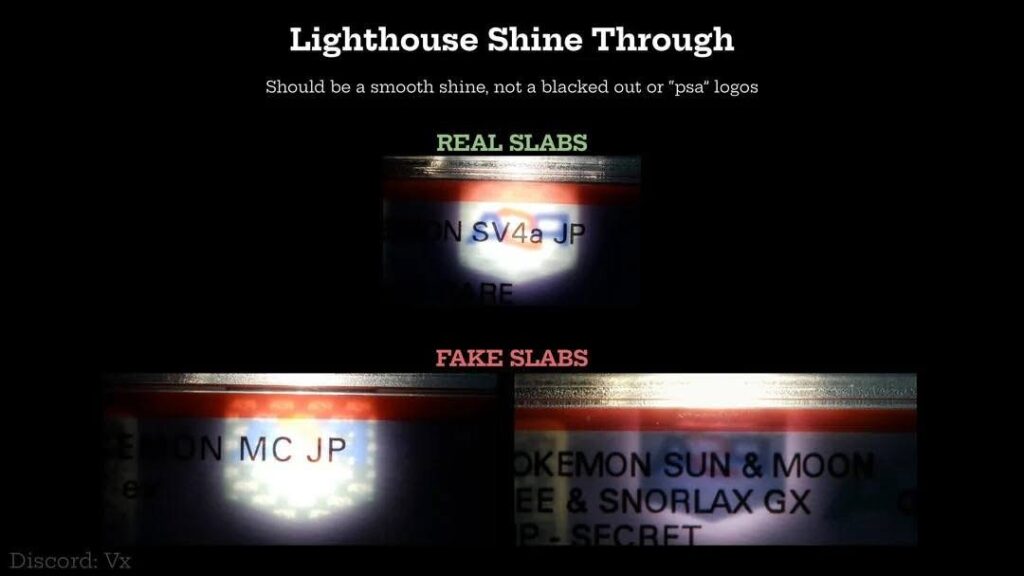
1. Check The PSA “Lighthouse” Hologram
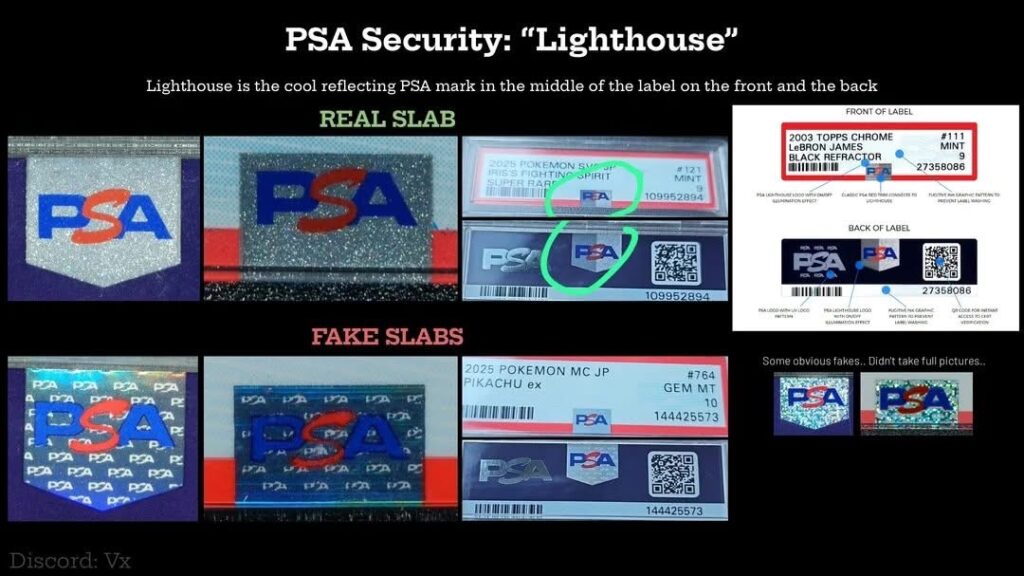
One of the biggest security features on modern PSA slabs is the reflective PSA hologram found on the label.
When tilted under light, authentic PSA slabs should show a layered “lighthouse” reflective effect instead of a flat reflection. Real slabs usually have cleaner depth and smoother transitions when viewed from different angles.
Some fake slabs still fail badly here.
Others are getting scary close.
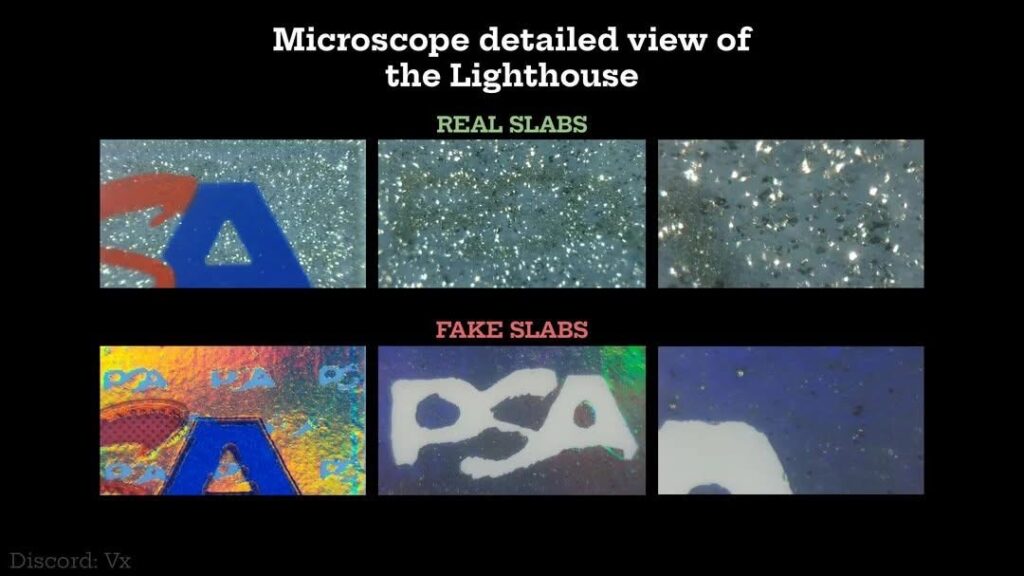
Under magnification, authentic PSA holograms also contain fine reflective particles and textures that counterfeit slabs often cannot reproduce properly.
If the hologram looks too flat, too blurry, or too perfect, slow down immediately.
2. UV Light Is Helpful — But No Longer Enough
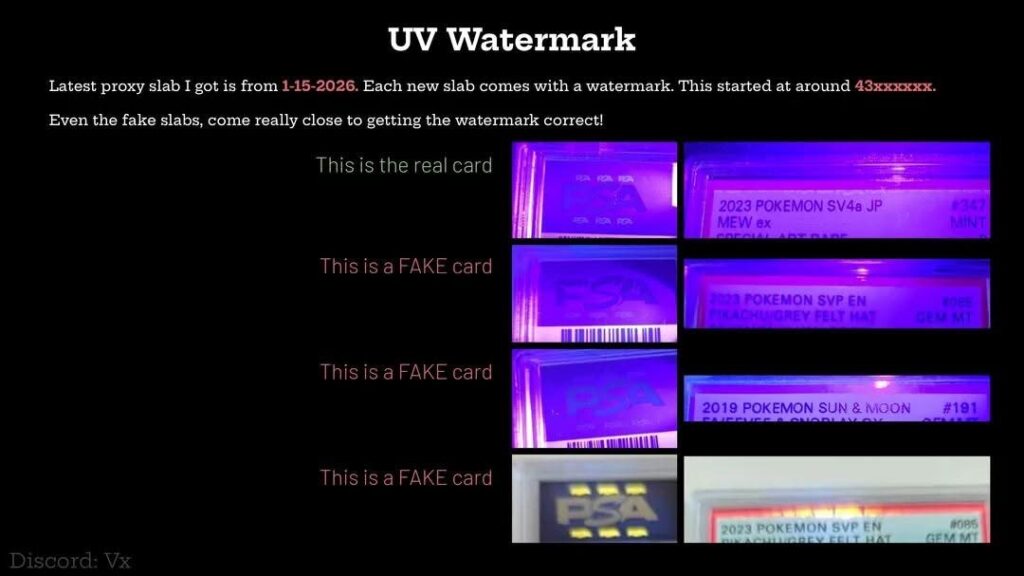
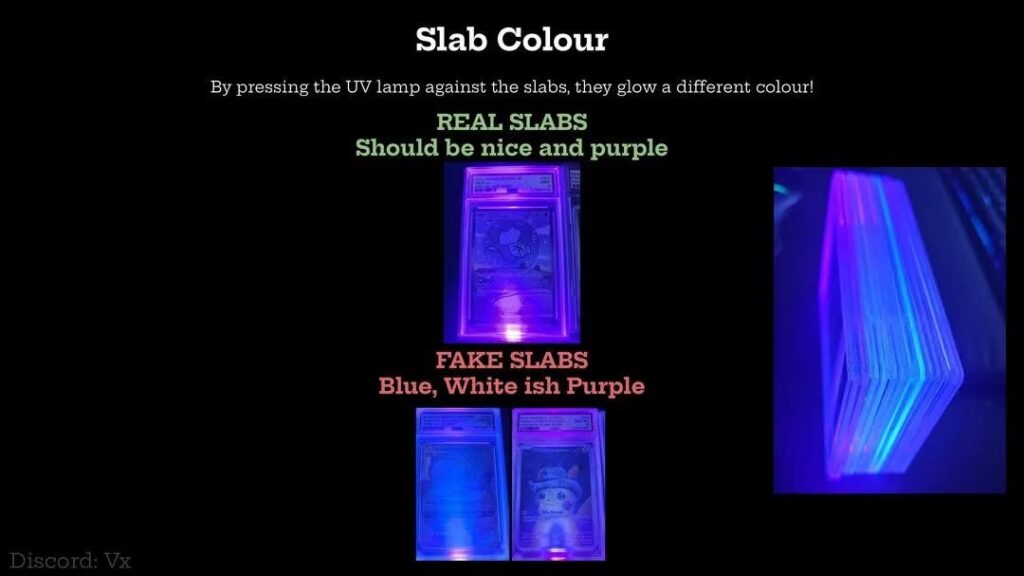
Many collectors now use UV or black lights to verify slabs.
Real PSA slabs contain UV-reactive security markings on both front and back labels. Under UV light, you should see hidden PSA patterns and watermark effects appear.
But here is the scary part:
Modern fake slabs are starting to copy UV patterns too.
That means UV verification alone is no longer enough to guarantee authenticity.
Think of UV checks as just one layer of protection — not the final answer.
3. Always Verify The Cert Number Properly
Scanning the QR code is NOT enough anymore.
Scammers now steal cert numbers directly from real PSA listings online. Some fake slabs will actually pull up legitimate PSA database records because the cert belongs to a real slab somewhere else.
You need to compare:
- Front card image
- Back card image
- Grade
- Label placement
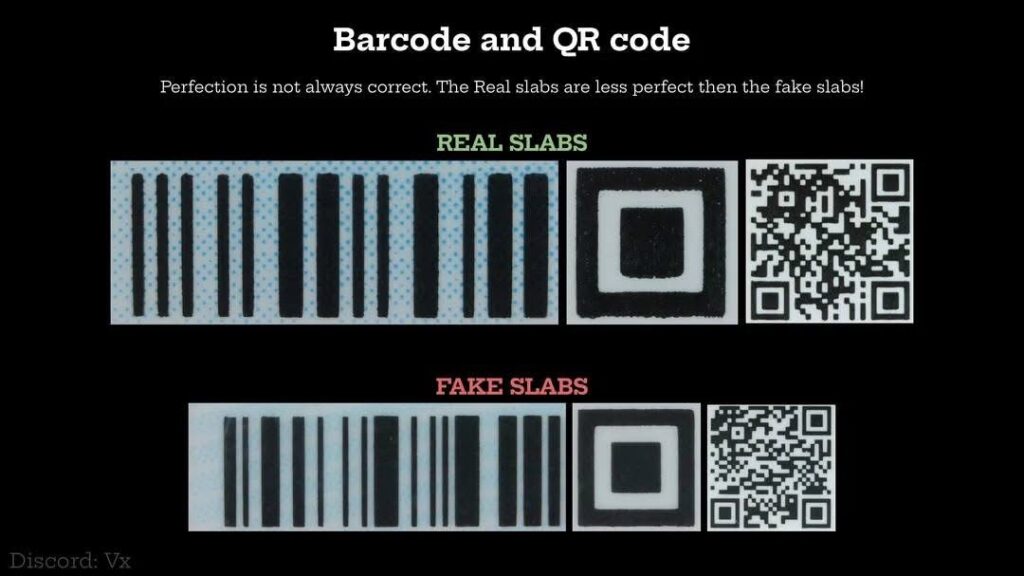
- Barcode
- Font style
- Cert details
Everything must match exactly.
Collectors should also compare slabs from similar cert ranges because PSA label styles and fonts have changed slightly over different generations.
4. Fake Fonts Are Getting Smarter
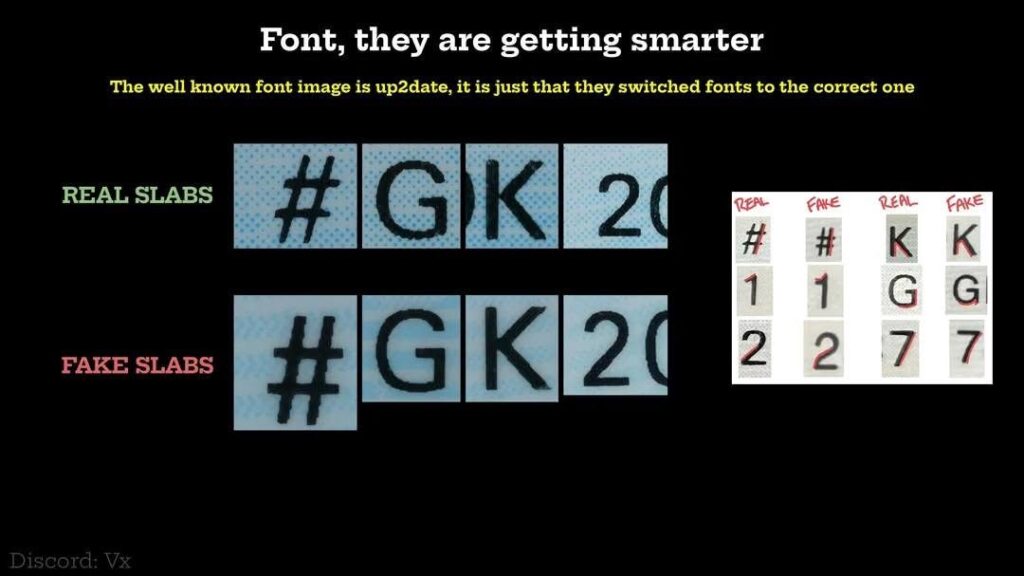
Years ago, fake PSA labels used terrible fonts.
Now?
Some counterfeit slabs are using fonts that are extremely close to authentic PSA labels.
But small differences still exist.
Watch carefully for:
- Thick lettering
- Oversized text
- Blurry printing
- Strange spacing
- Misaligned characters
- Incorrect “GEM MT” fonts
The “G” in GEM and certain serial number characters are still common giveaway areas on many fake slabs.
If unsure, compare directly with another authentic PSA slab from a similar cert range.
5. Feel The Slab Carefully
Authentic PSA slabs have physical construction details that are difficult to copy perfectly.
Collectors should:
- Run fingers along slab edges
- Check for glue marks
- Look for uneven seams
- Inspect for cracking or resealing
- Feel the PSA embossing
The PSA embossing near the slab corners should feel physically raised when touched.
If you cannot feel it:
- Remove any slab protector first
- Recheck carefully
Some scammers intentionally use thick slab sleeves or guards to make inspection harder.
6. Check The Internal Slab Structure
This is where things become really worrying.
Some scammers now buy authentic PSA slabs, crack them open, replace the original card with a counterfeit, then reseal the slab.
Meaning:
The outer slab itself may actually be real.
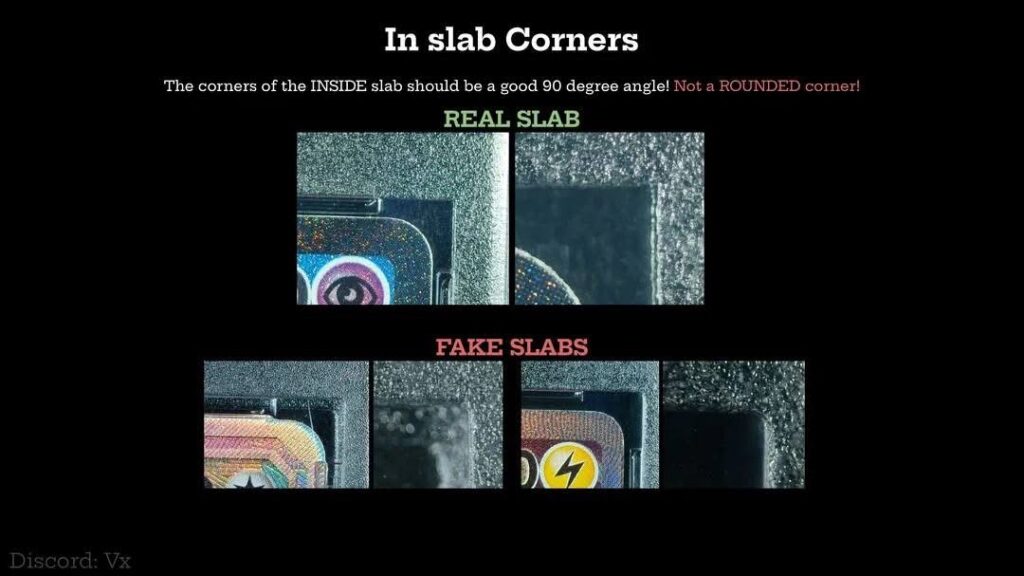
One useful check is the internal slab structure and corner details.
Authentic PSA slabs contain:
- Specific internal shapes
- Alignment cuts
- Plastic arrows
- Unique slab corner structures
Rounded internal corners or incorrect internal shapes are major warning signs.
These details are difficult for counterfeiters to reproduce consistently.
7. Inspect The Card Itself
Do not focus only on the slab.
Sometimes the slab looks convincing while the card inside immediately exposes the scam.
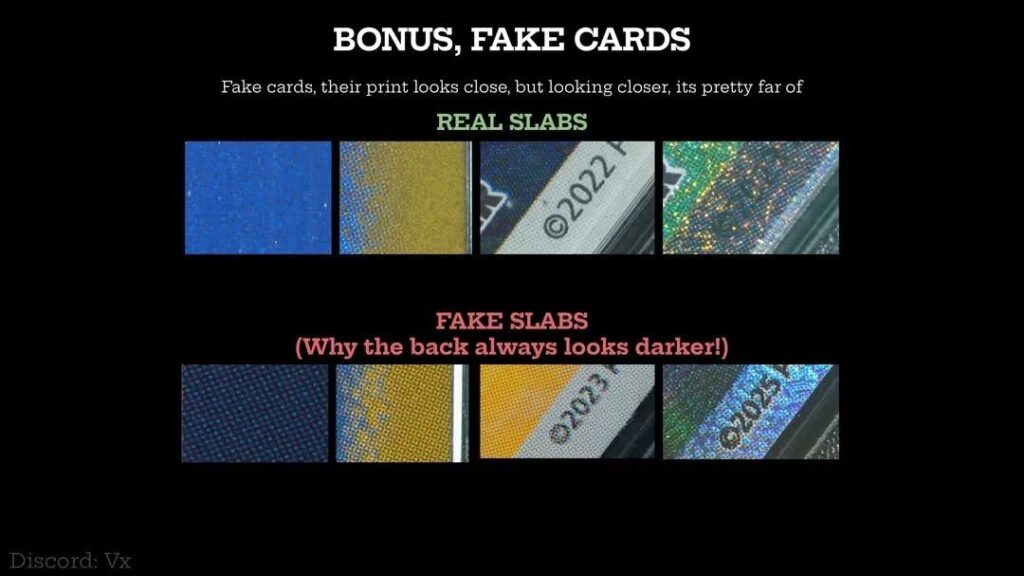
Compare suspicious cards with authentic examples online and check:
- Texture
- Holo patterns
- Colour saturation
- Surface shine
- Border thickness
- Print clarity
Many fake modern Pokémon cards still fail badly under close inspection.
High-risk targets currently include:
- Van Gogh Pikachu
- Moonbreon
- Team Up cards
- Modern Charizards
- Japanese promos
- Alternate Arts
Ironically, many counterfeiters specifically target modern cards because newer collectors are less familiar with authentic textures and printing patterns.
8. Beware Of “Too Perfect” Slabs
This sounds weird, but some fake slabs actually look cleaner than real PSA slabs.
Authentic PSA labels often contain tiny imperfections from manufacturing. Some counterfeit slabs look unnaturally sharp, symmetrical, or polished.
Perfection itself can sometimes become suspicious.
9. The Final Rule: If It’s Too Cheap, Be Careful
Most slab scams still start the same way:
A price that feels “too good to miss.”
Scammers rely heavily on:
- Urgency
- FOMO
- Flash sales
- Livestream pressure
- Blurry photos
- “Need money urgently” excuses
Whenever possible:
- Do COD deals
- Meet at card shops
- Ask experienced collectors
- Bring UV lights
- Compare with known authentic slabs
Because as Pokémon cards become more valuable, authentication is no longer optional.
It is now part of the hobby itself.
Related Post
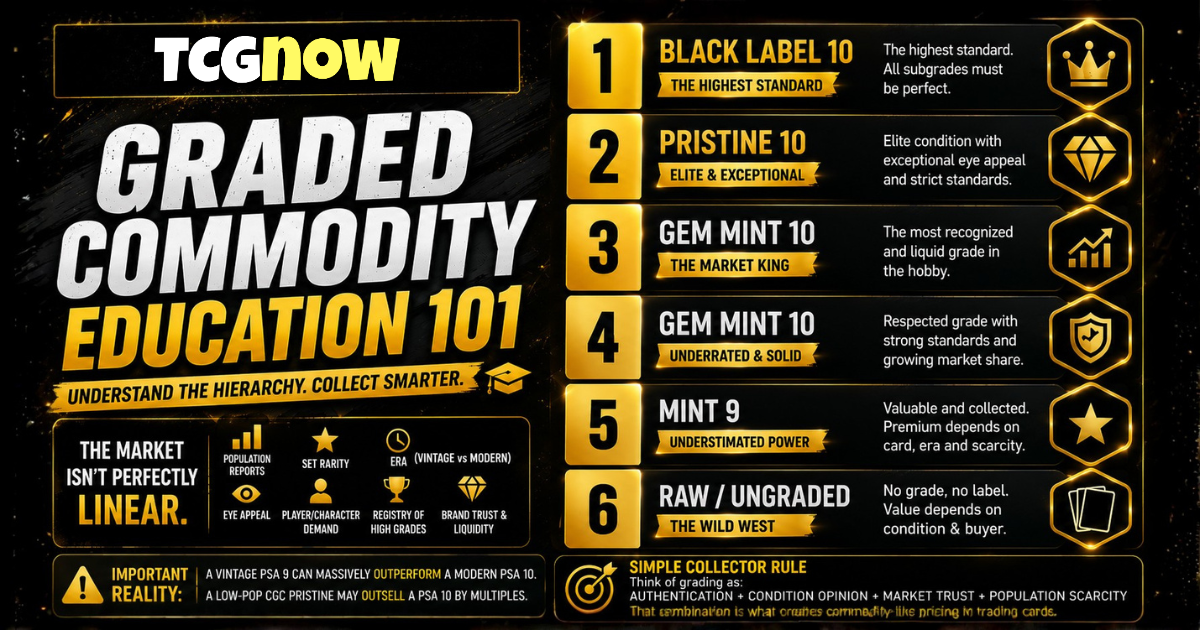
The Pokémon Grading Tier List Every Collector Learns Too Late
Most collectors think grading is simple. “10 is good. 9 is decent. Raw is cheaper.” [...]