The Fake Card Problem Is Getting Worse — And Pokémon Is Now The Biggest Target
The Pokémon TCG market has grown into a billion-dollar global hobby, but with bigger money comes bigger problems.
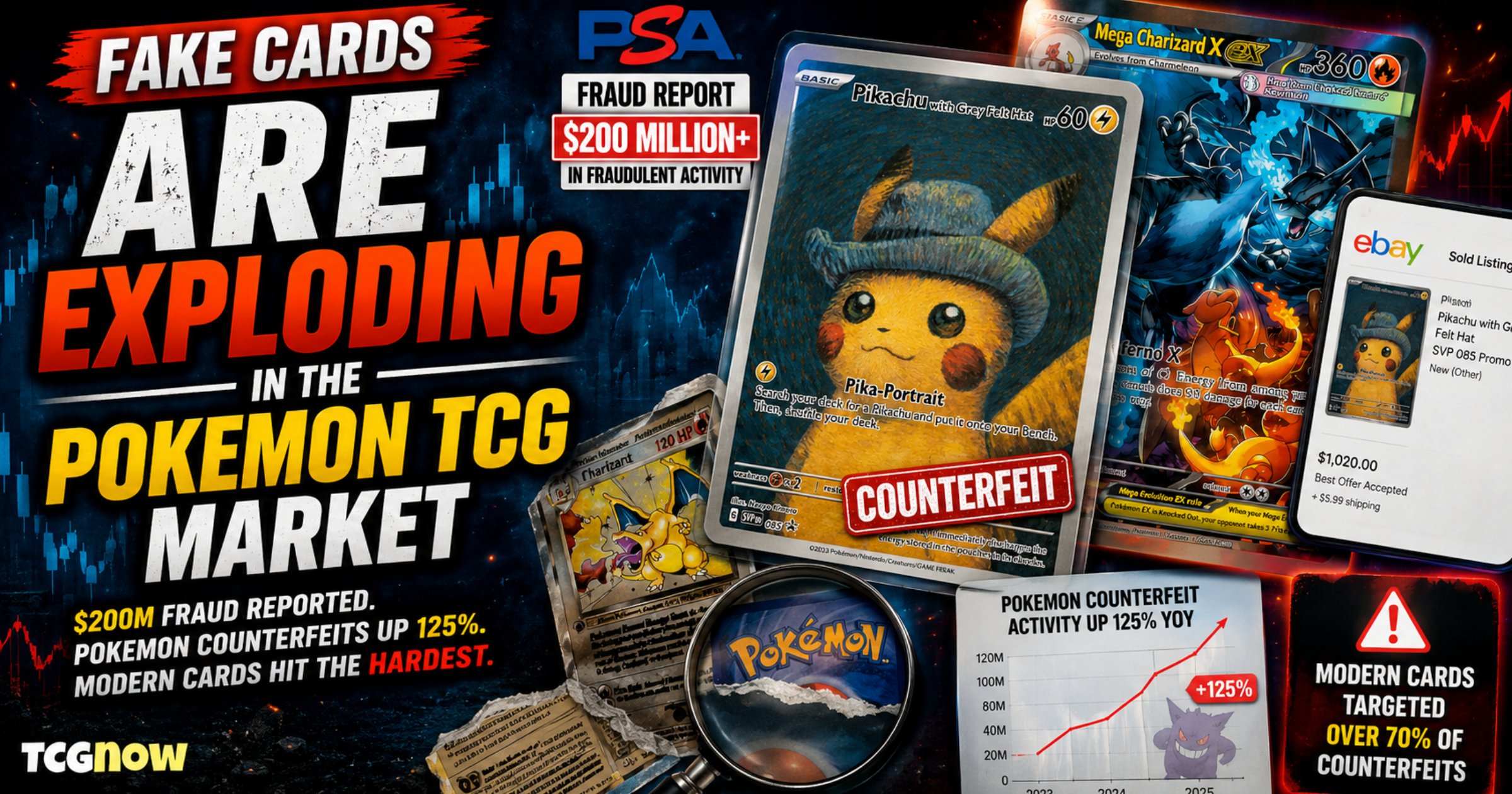
According to PSA’s latest fraud report, counterfeit trading cards have now been linked to more than USD200 million in fraudulent activity — and Pokémon cards are leading the charge.
Even more shocking, counterfeit Pokémon card activity reportedly increased by 125% year-over-year.
That is not just a small spike.
That is an explosion.
Pokémon Has Become The Main Target
For years, fake cards were mostly treated like cheap flea market scams.
You could usually spot them instantly:
- Wrong colours
- Fake holo patterns
- Terrible print quality
- Obvious spelling mistakes
But the market today is very different.
Pokémon now represents the majority of counterfeit TCG activity, according to the PSA report, and modern cards make up over 70% of detected counterfeits.
That changes the conversation completely.
This is no longer about fake “Base Set Charizards” sold by random sellers online.
Now we are seeing counterfeiters targeting:
- Modern chase cards
- New promos
- High-demand alternate arts
- Viral cards with rapid price growth
And yes — even cards like the Van Gogh Pikachu promo are already among the most counterfeited cards by volume.
That is insane considering how recent the card is.

Why Modern Pokémon Cards Are Easier Targets
Counterfeiters follow demand.
And modern Pokémon cards are perfect targets because:
- Prices move quickly
- Many buyers are newer collectors
- Most transactions happen online
- Print quality on real cards already varies
A newer collector seeing a blurry livestream, compressed Facebook image, or marketplace listing might never notice small differences.
Especially when the seller is offering:
“Below market price”
“Urgent sale”
“Fresh pull”
“Direct from Japan”
“PSA candidate”
The reality is simple:
The more expensive Pokémon cards become, the more profitable counterfeiting becomes too.
The Problem Is Bigger Than Most People Think
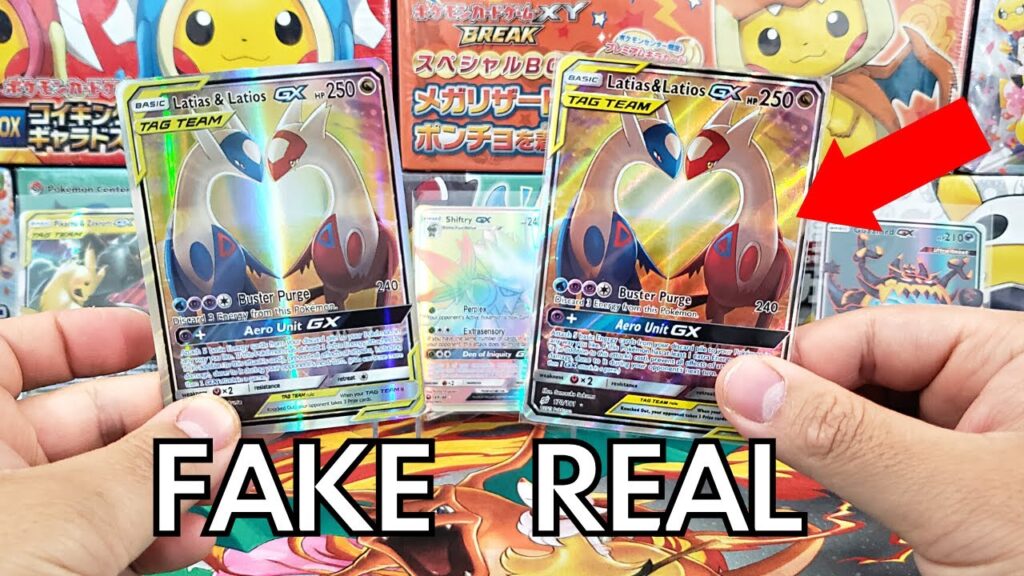
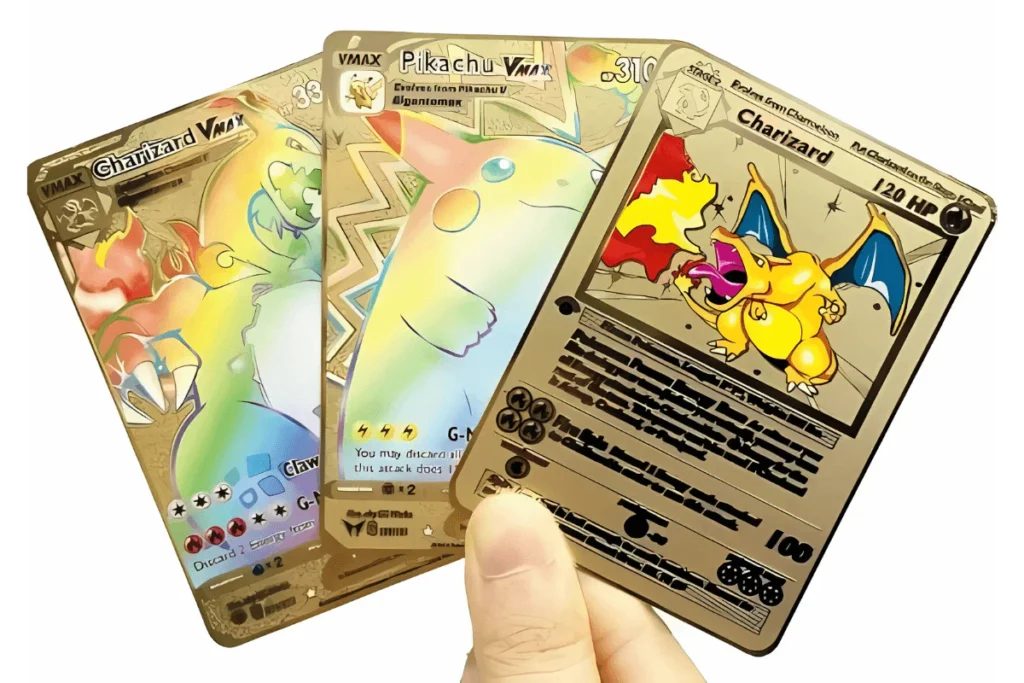
One of the most worrying trends is how convincing fake cards are becoming.
A few years ago, fake cards were laughably bad.
Today?
Some are good enough to fool casual buyers instantly.
And in many local deals, buyers never even inspect cards properly before paying.
This is especially dangerous in:
- Livestream marketplaces
- Facebook groups
- Community auctions
- Telegram sales
- Peer-to-peer meetups
Sometimes all it takes is:
- Poor lighting
- A sleeve
- Low image quality
- Buyer excitement
And suddenly a fake card becomes someone’s “investment.”
Why Authentication Matters More Than Ever
As the hobby matures, authentication is becoming part of the collecting process itself.
That does not mean every card needs grading.
But collectors should at least:
- Learn texture patterns
- Understand holo differences
- Compare fonts and borders
- Check seller reputation
- Verify expensive purchases carefully
Because the reality is:
Education is now part of protecting your collection.
This is also one reason graded cards continue gaining popularity. Buyers want confidence, especially for higher-end cards where counterfeit risk is increasing.
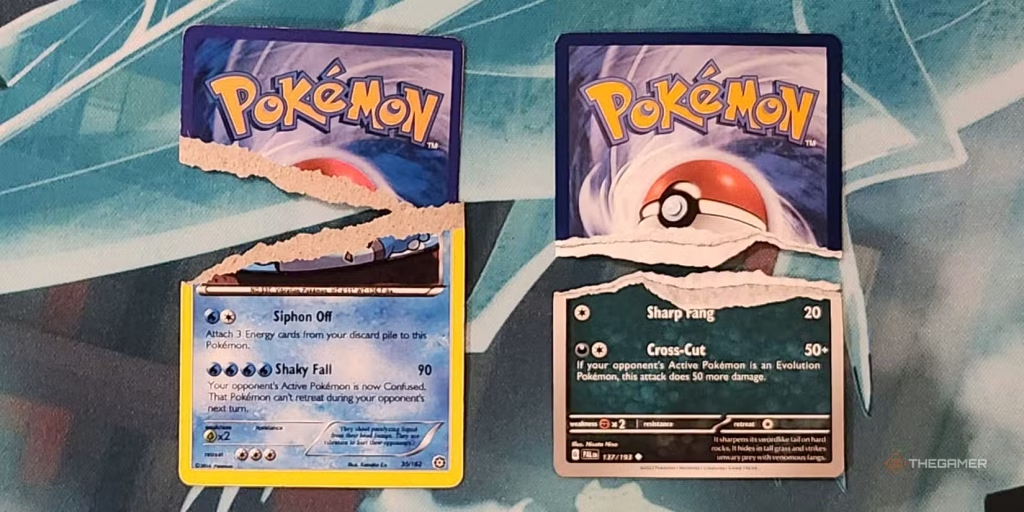
The Irony Behind Pokémon’s Growth
Ironically, this counterfeit problem exists because Pokémon is stronger than ever.
More money.
More collectors.
More attention.
More speculation.
Counterfeiters are not targeting weak markets.
They target markets where demand is exploding.
And right now, Pokémon sits at the center of the trading card world.
Final Thoughts
The Pokémon hobby is evolving fast.
But alongside the growth comes responsibility — especially for newer collectors entering the market through hype, livestreams, and social media trends.
Not every “deal” is real.
Not every expensive card is authentic.
And not every seller understands what they are selling either.
The good news is that awareness is improving.
Collectors today are more informed, grading companies are getting stricter, and communities are becoming better at spotting suspicious cards.
But one thing is clear:
As Pokémon cards become more valuable, authentication and education are no longer optional.
They are part of the hobby now.
Related Post

Ascended Heroes: A High-Risk Set with Long-Term Potential?
Ascended Heroes, released in early 2026, is one of the most talked-about Pokemon TCG special [...]
Why Sealed Pokemon Might Be the Most Underrated Asset in Collecting
For most people, Pokemon cards are just a hobby. You open packs, chase hits, maybe [...]