Are Pokémon Card Prices About to Drop? What Malaysian Collectors Should Expect After the 30th Anniversary
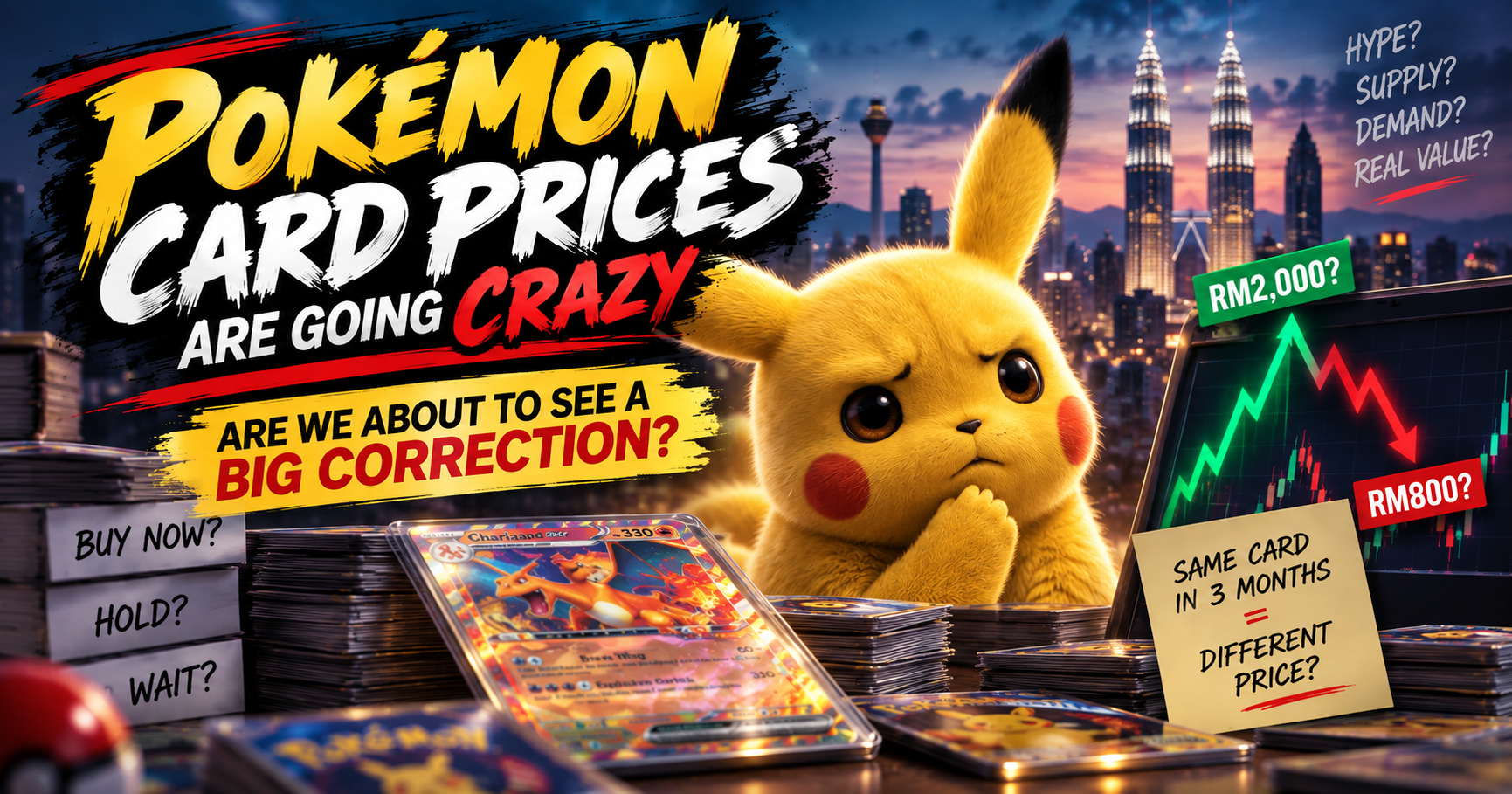
Pokémon’s 30th Anniversary has created one of the biggest hype cycles the hobby has seen in years.
But with prices already extremely high in some areas, Malaysian collectors are now facing a bigger question:
What happens after the 30th Anniversary hype is over?
Nobody can predict Pokémon card prices perfectly, but looking at supply, recent pricing and previous market cycles gives us some clues about what the next 12 months could look like.
1. 30th Anniversary Singles May Be Cheaper Than Expected
The biggest mistake may be assuming every major 30th Anniversary chase card will become another extremely expensive modern grail.
If Pokémon prints the anniversary products heavily, huge numbers of packs will be opened. That means more copies of regular pullable cards entering circulation.
We’ve seen this behaviour before. The 25th Anniversary Celebrations set initially had expensive singles, but many became much more affordable as more products were opened.
For collectors who simply want the cards, buying immediately during launch hype may therefore be the most expensive time to enter.
2. Malaysia Is Already Showing Us What FOMO Can Do
We don’t even need to wait months to see an example.
Before launch, some sellers in Malaysia were opening preorders for the 30th Anniversary ETB at around RM700.
After launch, we’re already seeing people offering the ETB at around RM500.
| Malaysia Market | Asking Price |
|---|---|
| Preorder period | ~RM700 |
| After launch | ~RM500 |
| Difference | -RM200 (-28.6%) |
Nothing happened to the ETB itself.
What changed was supply visibility.
Before release, collectors didn’t know how much stock would arrive. FOMO was high and sellers could command a bigger premium.
Once stock entered the market, suddenly got more choices already.
This doesn’t mean RM500 is the bottom. It could fall further or recover later. But it shows why preorder hype should never automatically be treated as long-term market value.
3. Promo Cards Could Be the Real Cards to Watch
Regular singles and promotional cards have very different supply structures.
A chase card pulled from packs can continuously enter the market as more products are opened.
A promo restricted to a Pokémon Center product, special collection or limited distribution cannot increase in supply the same way.
That’s why some of the most interesting cards from the 30th Anniversary era may eventually be the promos rather than the main chase cards.
The question collectors should ask isn’t simply:
“Which card looks nicest?”
It should also be:
“How many ways can this card enter the market?”
Scarcity matters.
4. Nostalgia Isn’t Going Anywhere
Pokémon 151 demonstrated just how powerful nostalgia remains, while releases such as Black Bolt and White Flare continued the strategy of revisiting specific generations rather than focusing entirely on the newest Pokémon.
That formula makes sense.
A collector who grew up with Charizard, Pikachu, Lugia or Rayquaza doesn’t suddenly stop caring about those Pokémon because a new generation launches.
We should therefore expect nostalgia-focused products to remain an important part of Pokémon’s strategy.
For collectors, this also means older fan-favourite Pokémon could continue receiving repeated waves of new demand.
5. The Bigger Question Is What Happens After the Anniversary
This could be the most important part.
Right now, Pokémon has a perfect hype machine:
30 years of nostalgia + new products + returning collectors + social media + speculation.
But anniversaries don’t happen every year.
Once the celebrations end, Pokémon needs another reason to maintain the same level of excitement.
If buying slows down afterwards, some cards and sealed products could correct.
That doesn’t automatically mean:
“Pokémon is crashing.”
There is a big difference between a market crash and prices simply returning from unsustainable hype levels.
An ETB moving from RM700 preorder to RM500 after release is a good example. A lower price doesn’t mean nobody wants Pokémon anymore.
It may simply mean RM700 was too expensive in the first place.
So, Are Pokémon Prices Going Down?
Probably the wrong question.
Different parts of the market could move in completely different directions.
| Category | What Could Matter Most |
|---|---|
| 30th Anniversary singles | Print quantity and pull rates |
| 30th Anniversary promos | Distribution and scarcity |
| Sealed products | Restocks and total supply |
| Vintage cards | Condition and existing supply |
| PSA slabs | Population growth and demand |
| Nostalgia sets | Collector demand after hype fades |
The next 12 months may therefore be less about whether Pokémon goes up or down and more about separating genuinely scarce collectibles from products that were simply expensive because everybody wanted them at the same time.
For Malaysian collectors, the RM700-to-RM500 ETB movement should already be a useful reminder:
Hype can create a price very quickly.
Whether that price survives after more stock enters the market is another story entirely.
Related Post
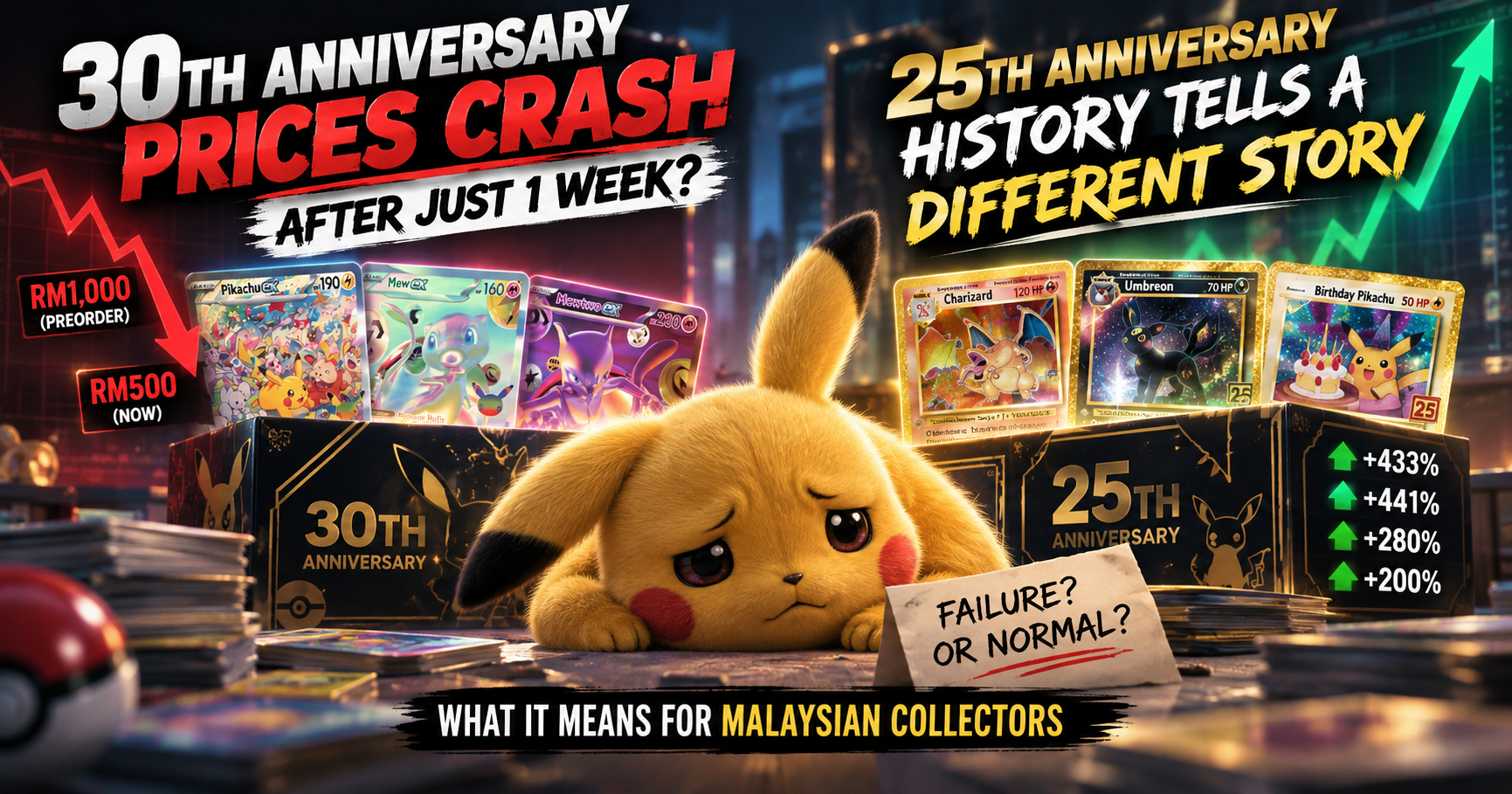
Pokémon 30th Anniversary Prices Just Crashed — Is the Set Already a Failure?
The Pokémon 30th Anniversary Celebration has barely launched, but some of its biggest chase cards [...]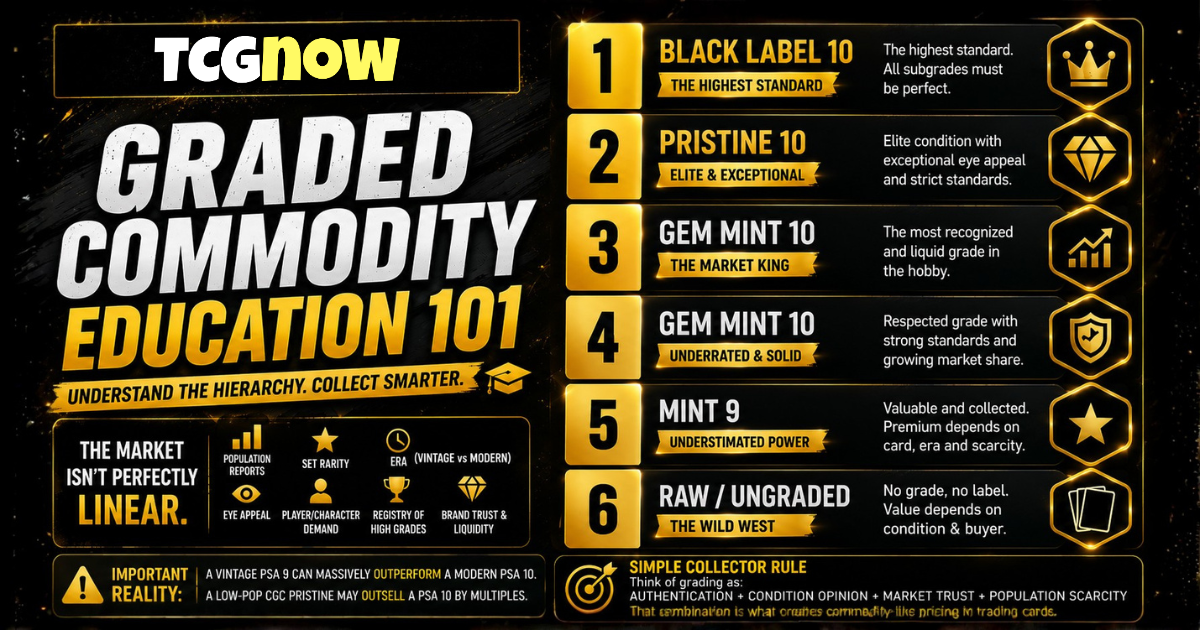
The Pokémon Grading Tier List Every Collector Learns Too Late
Most collectors think grading is simple. “10 is good. 9 is decent. Raw is cheaper.” [...]