Why You Can’t Buy Pokemon Cards at MSRP Anymore
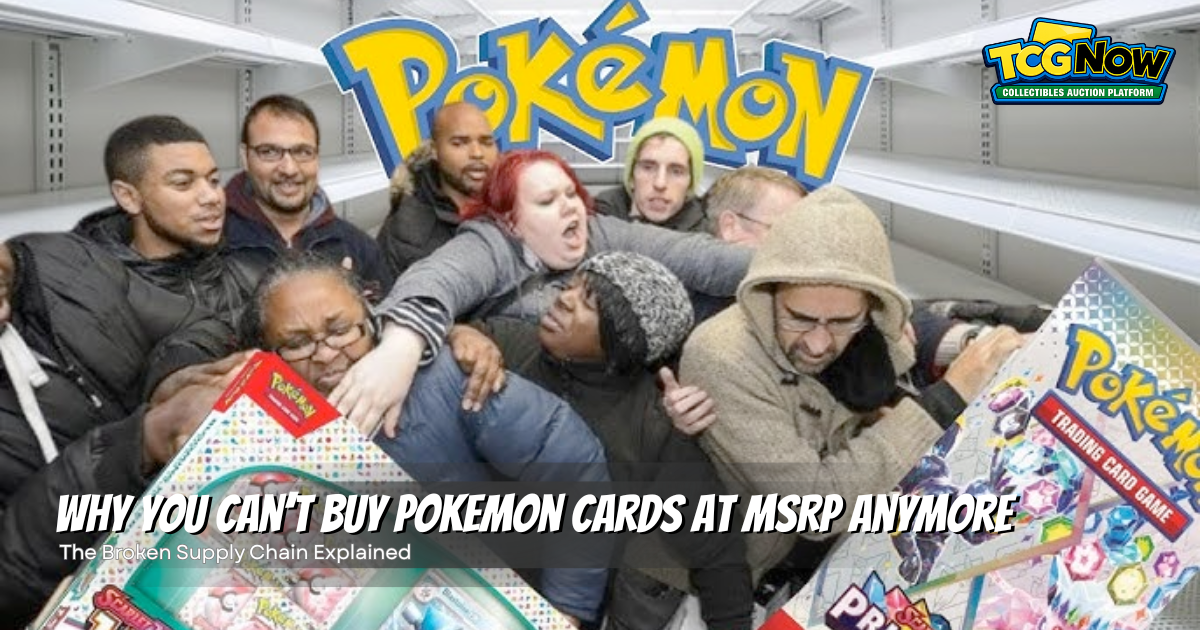
If you’ve tried buying Pokemon cards recently, you’ve probably noticed something frustrating.
MSRP almost doesn’t exist anymore.
Booster boxes are marked up. ETBs are overpriced. Even brand-new releases are already above retail before you can even get your hands on them. Most people think this is just because demand is high.
But the real problem is deeper — the supply chain itself is broken.
The Rise of the “Scalper Distributor”
Traditionally, Pokemon products follow a simple flow:
Manufacturer → Official Distributor → Retailer → Customer
Today, there’s a new layer in between.
Scalpers.
They are no longer just flipping a few boxes for profit. Many are buying large volumes early and controlling supply before it even reaches regular buyers. In some cases, they are effectively acting as unofficial distributors — setting prices based on what the market is willing to pay, not what MSRP suggests.
Why Supply Disappears So Fast
In larger markets, big retail chains receive massive allocations, making them the first target for resellers. In Malaysia, the situation looks slightly different — but the outcome is the same.
Supply hits:
- Major toy stores
- Online drops
- Selected retail outlets
And within hours (sometimes minutes), it’s gone. Not because casual collectors bought everything — but because resellers are faster, more organized, and often buying in bulk.
The Problem for Local Game Stores (LGS)
Local game stores are the ones caught in the middle. In Malaysia and across Southeast Asia, most LGS rely on:
- Maxsoft — the official Pokemon TCG distributor for Southeast Asia
Stock is not unlimited. It is allocated.
This allocation depends on:
- Past sales volume
- Store relationship with distributor
- Order history
Even if demand is high, an LGS might only receive a small portion of what they actually need.
When Allocation Isn’t Enough
Here’s where things break. When official supply doesn’t meet demand, LGS are forced into a difficult position:
Option 1: Sell out instantly and disappoint customers
Option 2: Source additional stock from the secondary market
And yes — that means buying from resellers. At higher prices.
Why Shops End Up Charging More
From the outside, it looks like shops are overpricing. But in many cases:
- They already paid above MSRP to restock
- Margins are tighter than people think
- They are competing with reseller pricing
So when a product hits the shelf at a higher price, it’s not always greed. Sometimes, it’s survival.
Why MSRP No Longer Works
MSRP only works when supply is stable and widely available. Right now:
- Supply is limited at the retail level
- Demand is extremely high
- Secondary market pricing dominates
This turns MSRP into a guideline — not a reality.
The Malaysia Market Reality
In Malaysia, this issue becomes even more obvious.
- Distribution is centralized through Maxsoft
- Allocation is limited
- Demand from collectors keeps growing
On top of that:
- Currency exchange
- Import costs
- Local reseller activity
All push prices higher before products even reach most buyers. By the time you see it on the shelf, it’s already above MSRP — or already gone.
Can This Be Fixed?
Short term — unlikely. As long as:
- Demand stays strong
- Supply remains controlled
- Resellers operate aggressively
This cycle will continue. Long term, improvements may come from:
- Better allocation systems
- Increased production
- More direct-to-consumer channels
But for now, this is the reality of the market.
What Collectors Can Do
Support Trusted LGS
Buying from reliable shops helps keep the ecosystem alive, even if prices are slightly higher.
Avoid Panic Buying
Paying inflated prices early only reinforces the cycle.
Be Patient
Most modern sets stabilize after the initial hype wave.
Conclusion
The reason you can’t buy Pokemon cards at MSRP anymore isn’t just demand. It’s a shift in how the entire supply chain works. Scalpers are no longer just flipping products — they are influencing distribution itself. And until that changes, MSRP will remain more of a suggestion than a real price.
Related Post
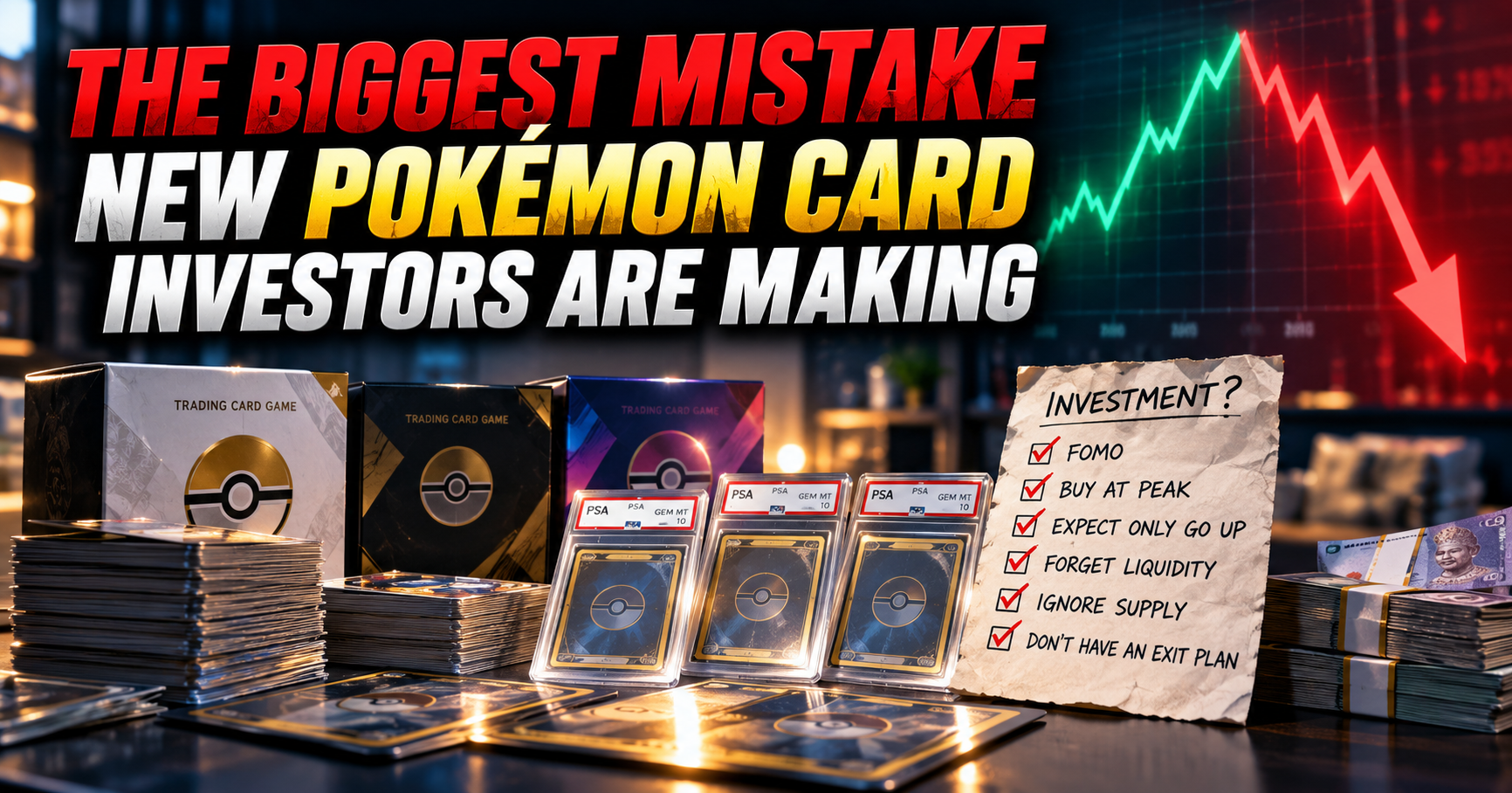
The Biggest Mistake New Pokémon Card Investors Are Making Right Now
Pokémon cards have become more than a hobby. Today, sealed boxes, PSA 10 slabs and [...]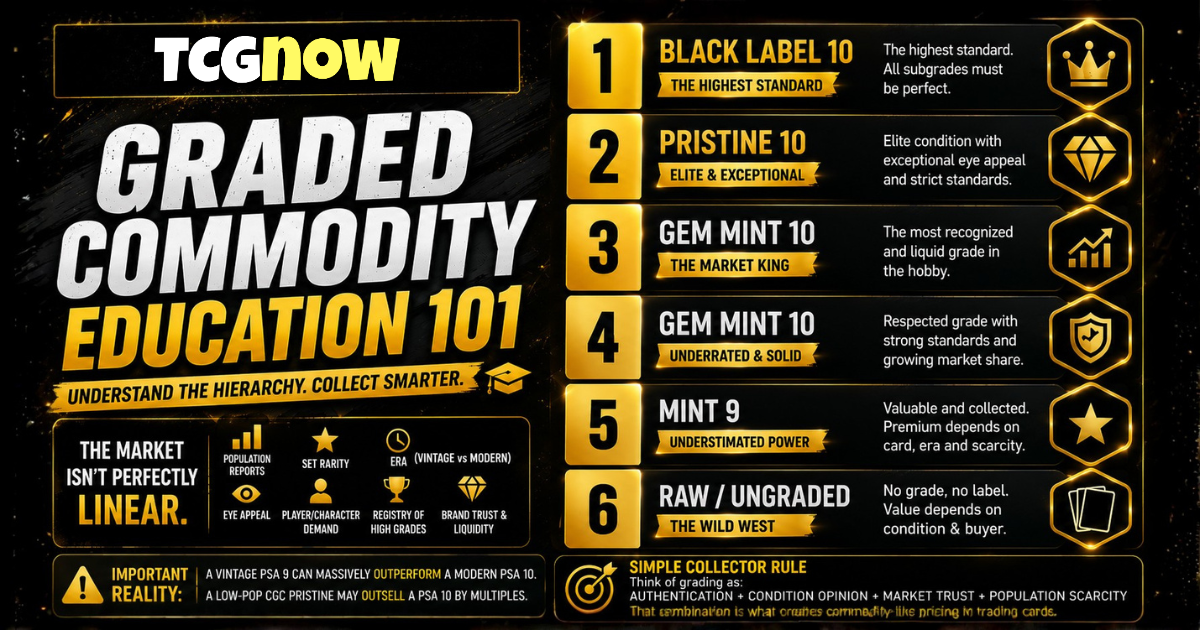
The Pokémon Grading Tier List Every Collector Learns Too Late
Most collectors think grading is simple. “10 is good. 9 is decent. Raw is cheaper.” [...]