Financial Expert Warns Pokémon Card Prices Could Crash 80% — Is the TCG Market in a Bubble?
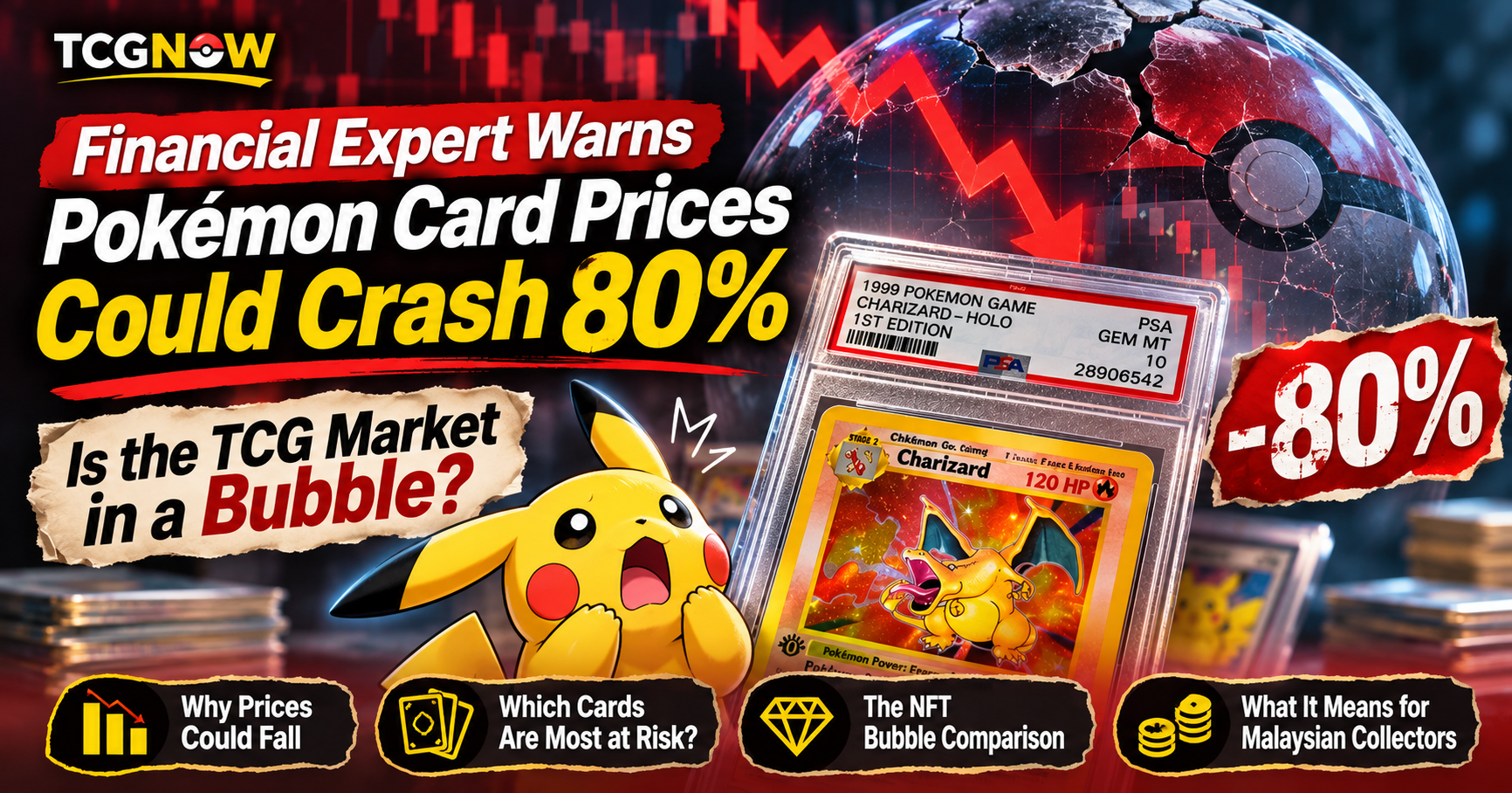
Could your RM10,000 Pokémon card collection suddenly become worth just RM2,000?
That’s the uncomfortable possibility being discussed after American financial expert Douglas Boneparth warned that Pokémon cards could experience price declines of 60–80% during periods when collector interest disappears.
In an interview with UltraBall published on 28 October 2026, the president of New York-based wealth management firm Bone Fide Wealth raised concerns about speculative buying, celebrity influence and the risks of treating Pokémon cards as investments.
His comments have since attracted attention across the collectibles community.
But is the Pokémon TCG market really heading towards a major crash?
Why Is a Financial Expert Warning About Pokémon Cards?
Pokémon cards have experienced extraordinary growth in popularity, with collectors spending thousands of ringgit on modern chase cards, vintage collectibles and PSA 10 slabs.
The market has also attracted celebrities and investors who may have little interest in actually playing Pokémon.
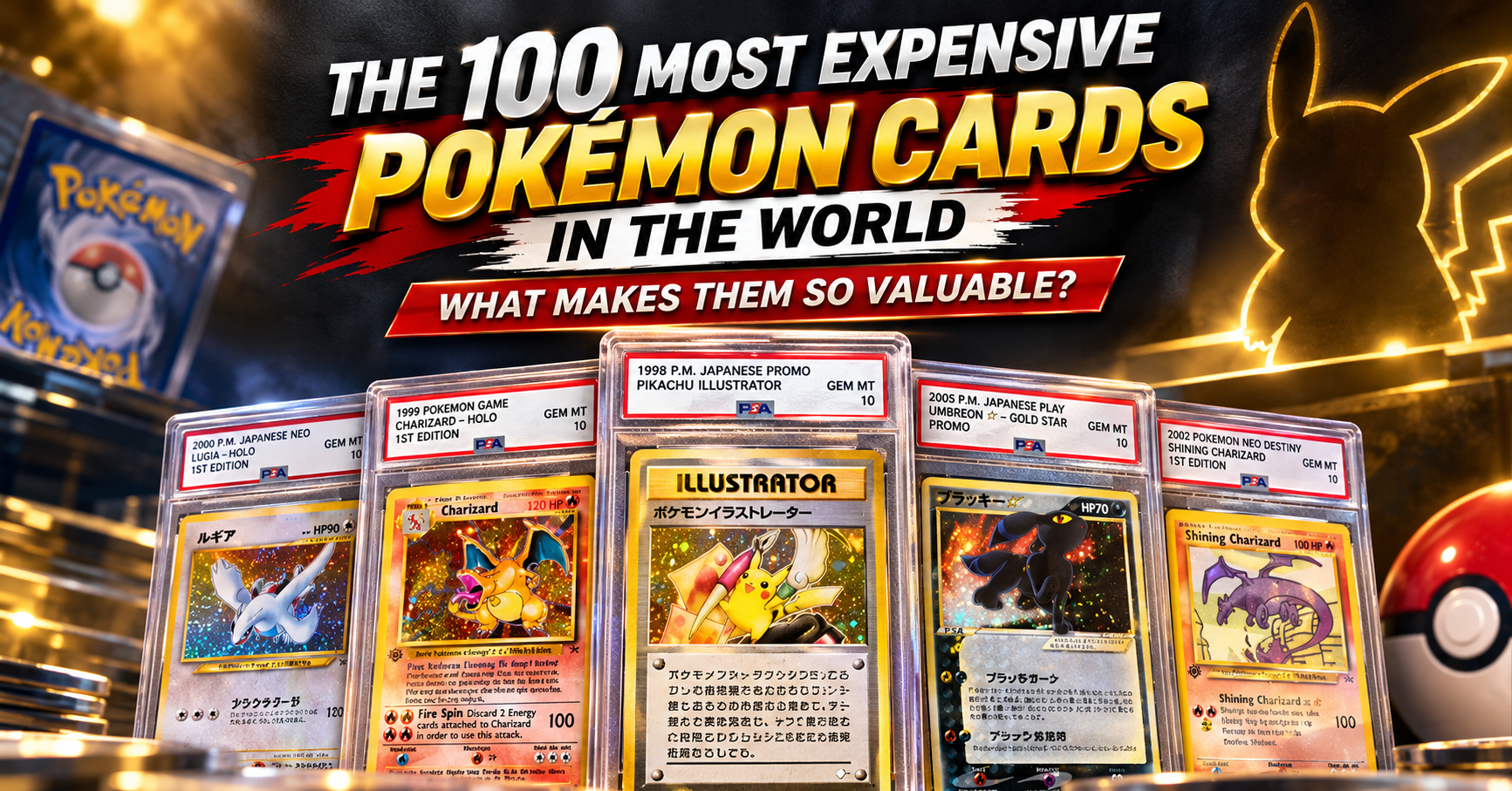
One particularly notable transaction was Logan Paul’s PSA 10 Pikachu Illustrator, which sold for approximately US$16.49 million in February 2026.
While record-breaking sales attract attention, Boneparth questioned whether today’s enthusiasm can be sustained indefinitely.
He explained that collectibles can experience extreme price fluctuations, particularly when speculative demand pushes valuations higher.
His warning about potential 60–80% declines was intended to illustrate the risks of holding volatile collectibles, rather than provide a specific forecast for the entire Pokémon market.
For Malaysian collectors, the implications are significant.
Imagine purchasing a PSA 10 Charizard for RM10,000, only to discover that buyers are offering RM4,000 several years later.
The card remains exactly the same. What changed was how much people were willing to pay.
The NFT Bubble: Could Pokémon Cards Follow the Same Path?
One of the most interesting parts of Boneparth’s interview involved his personal experience with NFTs.
During the NFT boom, he purchased a digital collectible called Cryptoadz for approximately US$1,200.
At one point, its estimated market value reached US$50,000.
However, the NFT market subsequently experienced a major correction, and many digital collectibles lost substantial value.
Boneparth reflected on how easy it was to believe prices would continue increasing when everyone appeared to be making money.
Could something similar happen to Pokémon cards?
There are similarities.
Both markets can experience speculative buying, celebrity-driven demand and fear of missing out, commonly known as FOMO.
However, Pokémon cards also have important differences.
The franchise has existed for decades, with an established trading card game, physical collectibles and a global community of collectors.
That history provides a foundation of genuine collecting interest.
Nevertheless, a strong franchise doesn’t guarantee that every Pokémon card is worth its current market price.
Which Pokémon Cards Could Be Most Vulnerable?
A market correction wouldn’t necessarily affect every category equally.
Modern chase cards with rapidly increasing grading populations could face pressure if speculative demand declines.
For example, a modern PSA 10 card selling for RM3,000 might struggle to maintain that price if thousands of additional Gem Mint copies enter the market.
Sealed products purchased primarily for resale could also experience selling pressure if investors begin liquidating inventory.
Vintage cards and rare Japanese promotional releases have different supply characteristics.
Cards such as 1st Edition Charizard, Gold Star Rayquaza and limited tournament prizes have historical significance that modern releases cannot replicate.
However, even extremely rare cards aren’t immune to price corrections.
Scarcity can limit supply, but it cannot guarantee demand.
During a financial downturn, wealthy collectors may become more selective, and expensive cards could take considerably longer to sell.
The Biggest Problem: What If Nobody Wants to Buy?
Boneparth highlighted another important weakness of the collectibles market: liquidity.
Unlike publicly traded stocks, Pokémon cards don’t always have large numbers of buyers ready to purchase at a transparent market price.
A card might have a recent recorded sale of RM20,000, but that doesn’t mean another buyer will immediately offer the same amount.
Imagine a collector urgently needing RM15,000.
Their Pokémon collection might be valued at RM25,000 based on recent sales.
However, if the highest available offer is RM12,000, the collector faces a difficult decision.
This is why estimated collection values and actual selling prices can be very different.
The problem could become more serious during a global financial crisis, when more collectors need cash and fewer buyers are willing to spend.
For Malaysian collectors, international pricing adds another complication.
Currency movements, overseas transaction fees and local buyer demand can all influence how much a card can realistically sell for.
Is a Pokémon Market Crash Actually Coming?
Despite the attention surrounding the 80% warning, there is no certainty that such a crash will occur.
Pokémon cards are not one uniform investment market.
Modern raw cards, vintage PSA 10 slabs, sealed booster boxes and rare trophy cards have different buyers, supply levels and trading activity.
Some categories could experience substantial corrections while others remain relatively stable.
Boneparth also discussed portfolio concentration, using a hypothetical 10–15% allocation to collectibles to illustrate the importance of managing risk.
He wasn’t recommending that everyone invest that percentage in Pokémon cards.
His broader message was that collectors should avoid putting their financial security at risk by concentrating too much wealth in volatile assets.
TCGNOW’s View: Collectors Should Prepare, Not Panic
At TCGNOW, we believe the most important lesson isn’t whether Pokémon cards will crash by 20%, 50% or 80%.
It’s understanding why you’re collecting in the first place.
If you’re buying cards because you love Pokémon, temporary price declines may not change your enjoyment.
But if you’re spending most of your savings on expensive slabs and sealed products because you expect guaranteed profits, you’re taking a very different risk.
A market correction could create opportunities for collectors with available cash, but lower prices don’t automatically mean good investments.
Before purchasing expensive cards, consider their grading populations, recent completed sales and how easily they could be resold.
Most importantly, avoid relying on your collection as your emergency savings.
Final Thoughts
The Pokémon TCG market has survived decades of changing trends, but today’s investment-driven collecting environment presents new challenges.
Celebrity purchases, record-breaking auctions and social media excitement can attract new collectors, but they can also encourage unrealistic expectations.
Pokémon cards may remain desirable for generations, but that doesn’t mean today’s prices will last forever.
The next major market correction, whenever it happens, could reveal which cards have sustainable collector demand and which were driven primarily by speculation.
What do you think? Could Pokémon card prices really crash by 80%, or is the market stronger than financial experts realise?
Share your thoughts with the TCGNOW community.
Related Post
Why You Can’t Buy Pokemon Cards at MSRP Anymore
If you’ve tried buying Pokemon cards recently, you’ve probably noticed something frustrating. MSRP almost doesn’t [...]
What Happens When the Pokémon TCG Hype Dies — And Who Gets Left Holding the Bag
What actually happens to the Pokémon TCG market when the hype dies down? Not slows [...]