Understanding Fake Price Drops in the Pokemon TCG Market
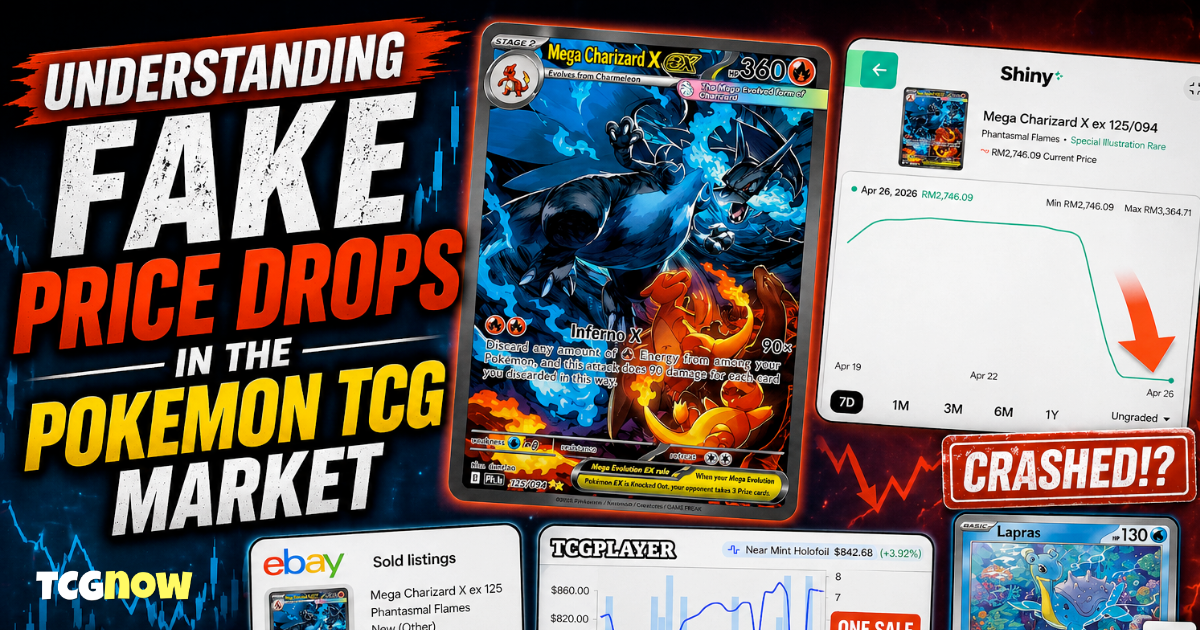
You’ve seen it before.
A card drops 20% overnight on Shiny. Screenshots start flying around. People panic.
“Market crashing?”
“Time to sell?”
But here’s the truth most people miss:
The price didn’t crash.
The data just got messy.
Where These Prices Actually Come From
Apps like Shiny and Collectr feel like “live market prices.” But they’re not. They’re just pulling data from:
- eBay sold listings
- TCGPlayer transactions
That means:
If the source data is flawed, the price you see is flawed too.
How One Fake Sale Can Move the Market
Let’s say a card is worth around RM3000. Now imagine this happens:
- Someone lists it at RM250
- It gets “sold” (or bought by themselves)
- Multiple similar listings appear
What happens next?
The app reads:
“Recent sales are lower.”
And suddenly:
- RM3000 → RM2800
- RM2800 → RM2600
Now everyone thinks:
“The card is crashing.”
But in reality? It’s just bad data being averaged in.
Real Case: Mega Charizard X ex
Let’s look at a real example.
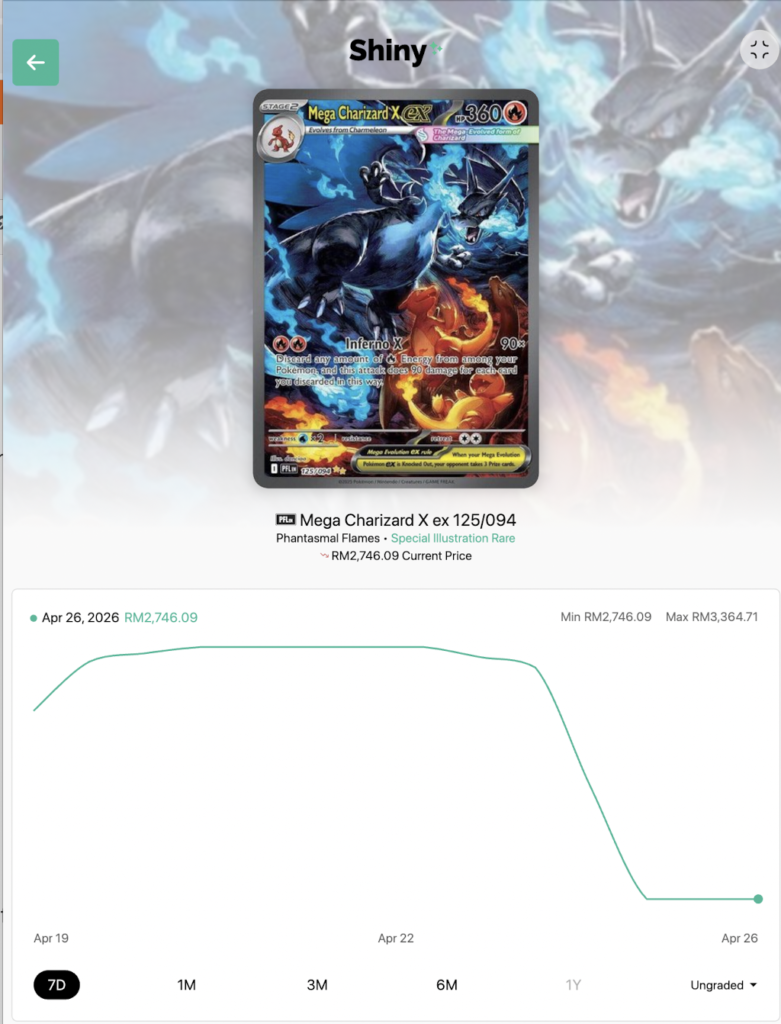
On Shiny:
- Peak: ~RM3360
- Few days later: ~RM2810
- Drop: ~20%
Looks serious. But when you check eBay: You’ll find listings like:
- Unrealistically cheap sales
- New seller accounts
- Multiple “copies sold” at weird prices
These are classic red flags:
- Too cheap to be real
- Likely scams or manipulation
- Or non-legit transactions
But the system doesn’t know that. It just sees numbers.
TCGPlayer Has the Same Problem
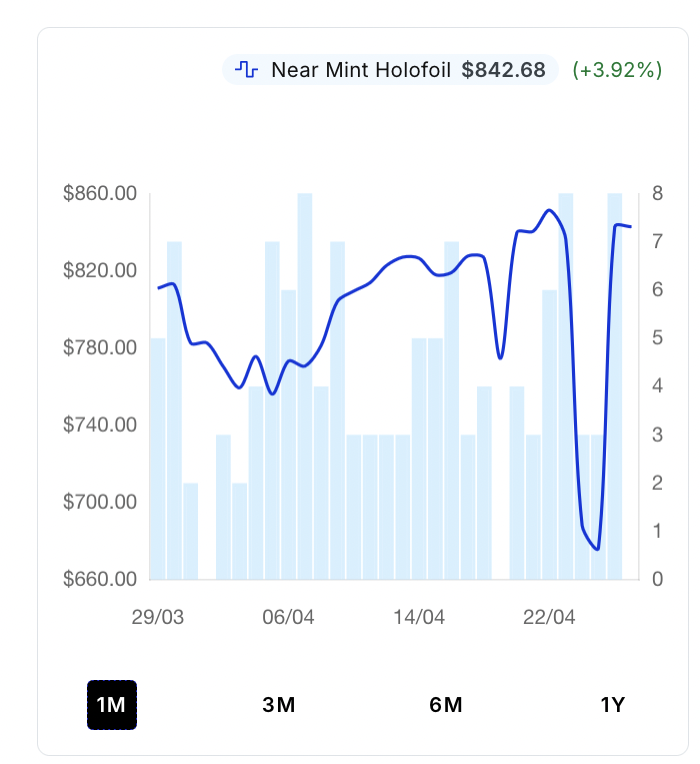
Now layer in TCGPlayer data. Let’s say:
- Very few sales happen
- One random sale at a much lower price appears
That single transaction can:
- Pull down the average
- Create a sudden dip
- Trigger a fake “market movement”
And then? A few normal sales happen again… And the price “recovers.”
So… What’s Actually Real?
Here’s the simplest way to think about it:
Fake Movement
- Sudden sharp drop or spike
- Very low transaction volume
- Suspicious listings
- Price quickly rebounds
Real Movement
- Multiple cards moving together
- Consistent trend across platforms
- Strong and repeated transactions
- Sustained direction
If the whole market moves? That’s real. If just one card glitches? That’s noise.
Why Shiny Isn’t a Final Price
This is where many collectors get it wrong.
Shiny = reference
Not value
That’s why:
- Sellers list above Shiny
- Buyers offer below Shiny
And both sides can still be reasonable. Because price is not just data.
It’s:
- Availability
- Condition
- Urgency
- Location
The Malaysia Factor (Most People Ignore This)
Most pricing data comes from:
- US sellers
- US buyers
- US market conditions
But Malaysia is different.
Example: Lapras 7-11 Promo
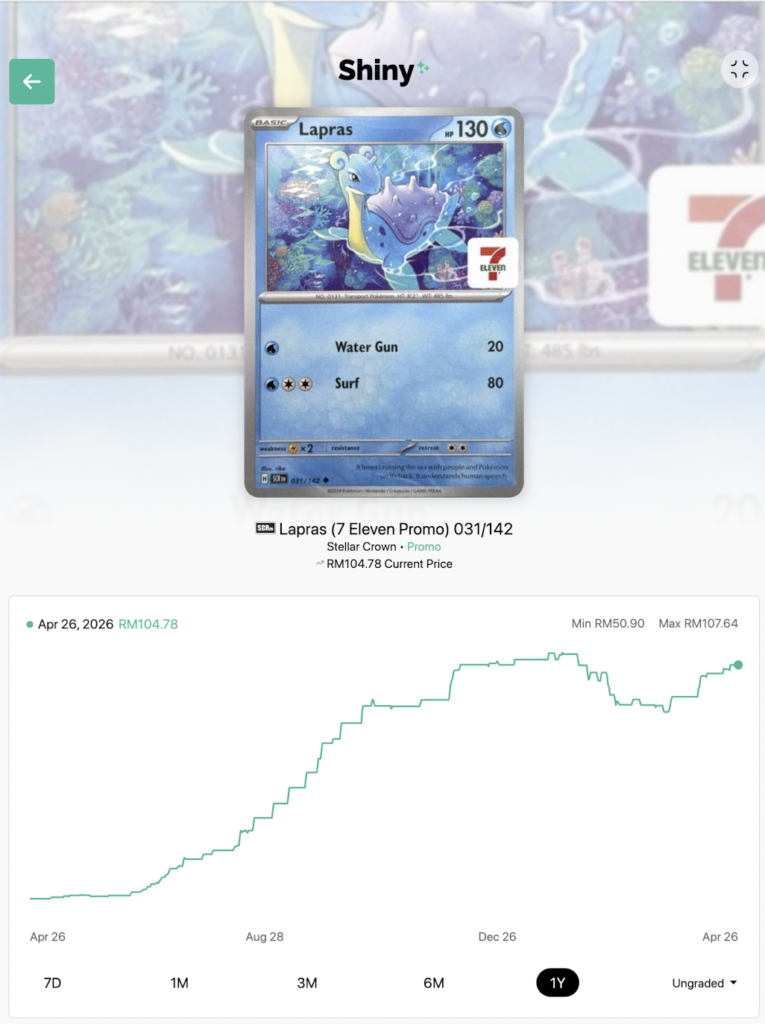
- Common in Asia
- Hard to get in the US
So:
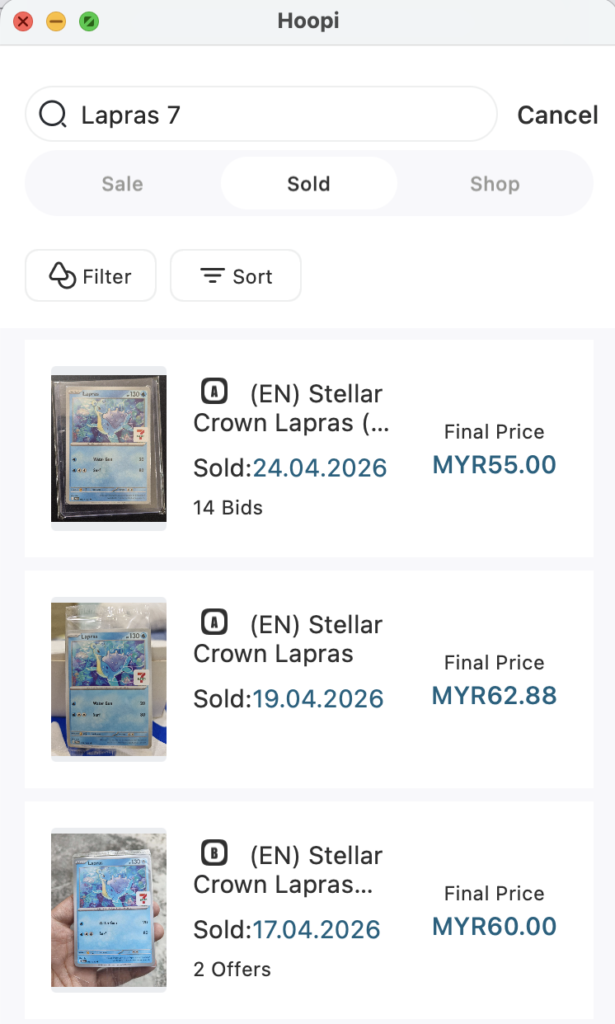
- Malaysia: low interest
- US: higher price due to import
Same card. Different reality.
The Real Skill Isn’t the App — It’s You
Anyone can open an app and read a number. But that’s not how you win in this hobby. You need to:
- Check eBay sold listings
- Ignore suspicious transactions
- Look at volume, not just price
- Ask if the number makes sense
Because the market isn’t clean. But it’s predictable — if you understand it.
Conclusion
Not every drop is a crash.
Not every spike is hype.
Sometimes it’s just:
- Bad data
- Low volume
- Or manipulation
The difference between a beginner and an experienced collector is simple:
One reacts to the price. The other questions it.
Related Post
Why Pokémon Cards Are Becoming Real Assets (And Not Just Nostalgia)
A few years ago, most people looked at Pokémon cards as childhood memories. Today, that [...]
The Pokémon Grading Tier List Every Collector Learns Too Late
Most collectors think grading is simple. “10 is good. 9 is decent. Raw is cheaper.” [...]